

 academiccompositionab
 Empowerment Equalizer
 SSaragian
 Antony Sammeroff
 Ann Sterzinger
 Rodney
 RJ
RJ busterjames
 cainusmaxus
 Craig FitzGerald
 David Heleniak
 Caity & Dan Greene
 keirmartland
 Keith Preston
 Bill the Butcher
 ljp711
 MRDA
MRDA Jack Donovan
 Rachel Haywire
 comrade hermit
 Michael
 Vince
Vince Regan
Regan robertstark2014
 Noonan
 S E Pearson
 Rachel Haywire
 Nexus X Humectress
Energy, mobilization. Wear warm vibrators, kill the draft-dodgers.
Today’s topic: Why there’s no need to get excited for a popular anti-war uprising.
Millions are freezing in their apartments, and there have even been cases of energy officials beaten by angry mobs. And the bloody war between mobilization press gangs and draft-dodgers continues. But despite the undoubtedly tense situation, I remain confident that the farce will continue. Nationalists will continue to call for killing the draft dodgers, while media influencers tell cold citizens to keep warm with warm vibrators.
A note on possible accusations of cynicism. As you’ll see, I place little stock in the likelihood of ‘the people’ taking matters into their own hands. I know people who, faced with this fact, have come to despise their own nation. An old friend of mine from Kiev escaped mobilization to the EU in 2024, after a year hiding from the mobilization press gangs with a handgun under his belt, ready to take matters into his own hands. When I talk with him, he is filled with revulsion at what he calls the ‘Ukrainian slave nation’ (he uses a different word instead of ‘Ukrainian’).
In truth, I think that there is nothing special about Ukrainians. This population has merely had the bad luck to be born in a territory located in geopolitical crossfire. As the global order disintegrates, more and more countries are finding themselves at the edge of these very same tectonic plates.
Hence, today’s article will be relevant to many readers. I’ve always believed in the unfortunate fact that the world is being Ukrainized.
A German parable
For instance. I met some young Germans at a bar the other night, so I asked them what they thought about conscription and Sahra Wagenknecht. None liked the idea of serving in the army, but Wagenknecht was more complex. One east German said that while half of what she says is highly appealing, he doesn’t like much else. Particularly, he said, the fact that ‘she wants Ukraine to give up everything to Russia’.
It may simply be political correctness. But I think there is something deeper at play here. Most people, especially those of draftable age, are highly unenthusiastic about fighting and dying in a war, about the replacement of the social state with the military state. But this reluctance remains politically inchoate, lacking clear answers on the real questions. We will soon see how this dynamic plays out in Ukraine itself.
In other words, while most Europeans may not wish for war with Russia and prefer a social state to a war state, it is not a mainstream position to advocate for the only realistic way to do so — seriously engage with Russian demands and place pressure on Ukraine to give in to them.
Contrary to popular belief, this wouldn’t mean ‘abandoning all of Ukraine to Russia’. This would mean Ukraine leaving the relatively small section of the Donbass not yet under Russian control. This is not a change on the maps that most Europeans would notice. But it is the main thing that Russia demands, the main stumbling block in negotiations.
Of course, militarists will respond that if the Donbass is abandoned, then Russia will have control over Ukraine’s strongest defensive lines, making it easier for a future Russian invasion to take the rest of Ukraine.
In fact, there is an easy response to this. It is much easier to build fortifications during a ceasefire than when enemy drones and artillery are constantly targeting construction. Militarists like to whine about the Russian demands to lower the size of the Ukrainian army to 500,000. However, the reality is that the Ukrainian army is in fact much smaller than the 800,000 Zelensky claims. Due to desertion and losses, it is actually probably well below 500,000. And anyway, were there to be a new invasion, it would hardly be an issue to mobilize troops once again.
The real reason why a ceasefire is resisted is twofold. First, an end to the war would probably mean much less foreign aid. All the talk of post-war reconstruction is likely to be a mirage, and at any rate much smaller than the wartime military aid bonanza.
Second, an end to the war would involve some degree of political normalization domestically. The elections dreaded by nationalists might finally take place, at which point the silent majority of Ukrainians deeply dissatisfied with endless war would vote in ‘the wrong candidate’. Even without elections, it would be much harder to maintain the drumbeat of nationalist hysteria if the guns stop firing. Internal Ukrainian political conflict would inflame anew.
The existence of this silent majority that wants peace through territorial compromise, but states the opposite in polls when asked due to societal pressure, was recently confirmed in an interview by former foreign minister (2020-2024) Dmytro Kuleba:
Ukrainian society — what everyone sees in polls and ratings — is one thing. But what is said in kitchens is completely different. Yes. That’s what people say on the streets and in kitchens. Honestly, I’m even glad I left the ministerial post in autumn 2024. Because when I traveled across Ukraine — I had been traveling the world for 21 years — I finally had the chance to travel around Ukraine.
When I visited villages, when I started talking to people not at gas stations of some sponsor or others, but at bus stops with a shot of vodka, honestly, I stopped reading social polls. My impression is that if people are told: “Here’s what we have to give up,” but also told what we get in return — a strong army, billions for reconstruction, and EU membership — then the story becomes acceptable.
Excuse me for expressing a controversial opinion. I think this is a story that society will be ready to accept, provided that nowhere is it written that we are permanently and irrevocably giving up these territories.
The limits of the ukhilyant
In Ukraine, the term for draft-dodger is ‘ukhilyant’. Contained in this term are many of the contradictions existing in broader European anti-war politics.
The ukhilyant question has become the principal dividing line in wartime Ukrainian politics, largely replacing the old question of geopolitical alliance with west or east. After all, now even hardcore nationalists accept that NATO will never accept Ukraine. Now, the question is whether one accepts the alternative of becoming a permanently mobilized ‘big Israel’ or not.
When Ukrainian nationalists speak of their fear of the ‘pro-Russian post-war electoral revanche’, they are referring to the ukhilyant electorate. Ukraine’s most influential liberal nationalist publication, Ukrainska Pravda, wrote a famous editorial in 2025 warning of the ‘Ukhilyant party’ in post-war elections, which they feared would be able to count on the support of a very sizable portion of the population. As they note, while a million men serve in the army (a massive exaggeration, by the way), 6 million have been evading mobilization. I’d add that many in the army, too, are quite unhappy with endless war.
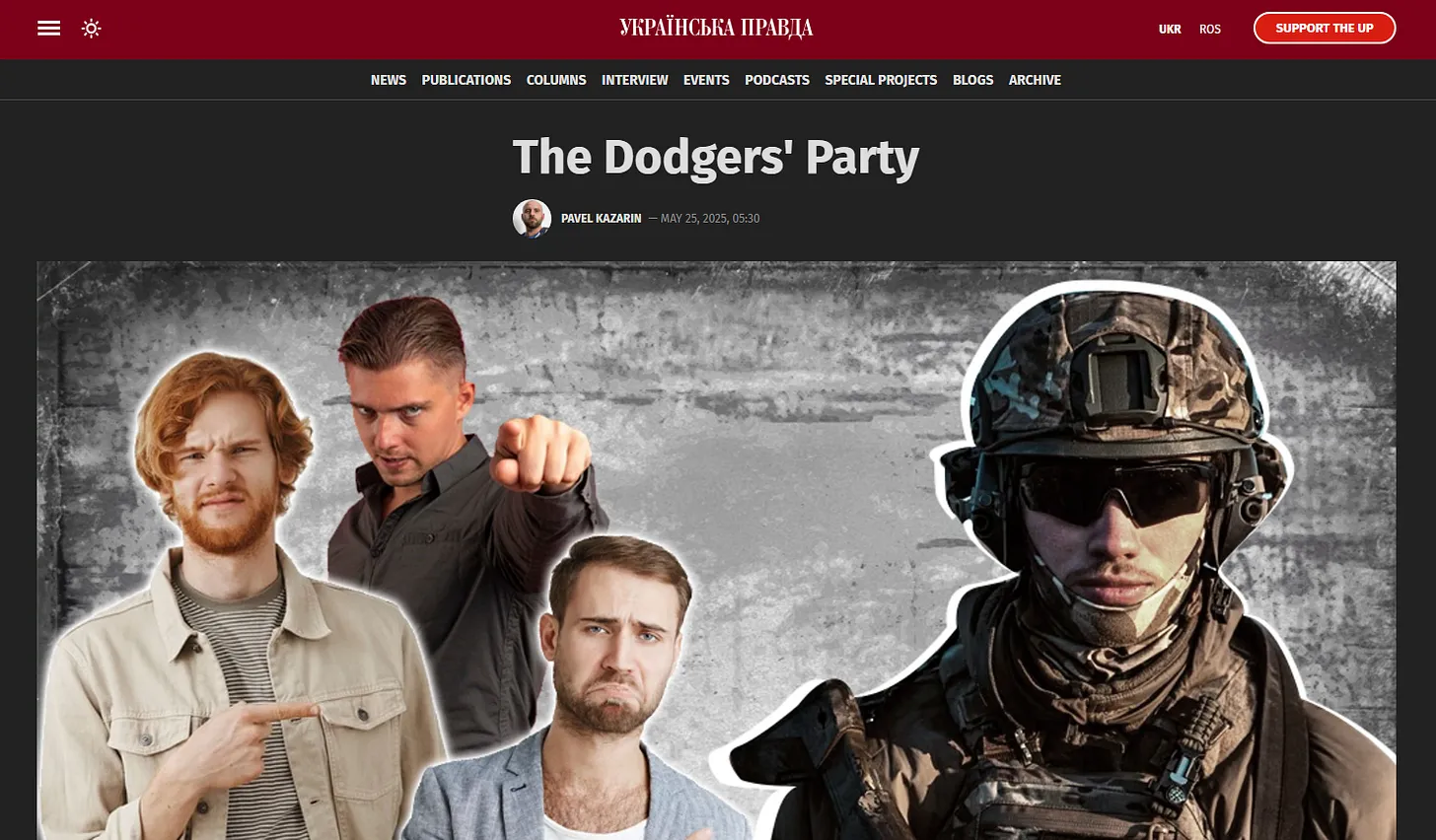
In August, the same ‘liberal’ paper, owned by the Czech business partner of Soros Sr, put out an article arguing that history has shown that it is sometimes necessary to kill not just ukhilyants, but entire villages of Ukrainians who resist mobilization.
However, I fear that Ukrainska Pravda’s fears are excessive. The ukhilyants will be quite easily managed. The problem is that there is no real political content to this position. The most concrete thing that most people decried as ukhilyants do is flee to Europe.
Don’t get me wrong, I have total empathy for men that want to avoid dying in an utterly idiotic war. But there is no constructive national project contained in this position. Ukhilyants don’t want to join a political party, let alone create one. Their main priority is to escape a country they see as a prison factory of death.
The term ukhilyant covers a vast variety of political positions. Many are quite nationalistic, but simply think that they are ‘not fit for fighting’, that ‘professional soldiers should fight, but not me’. They sometimes also say that they are very happy to help the army in their civilian capacity, say, as an IT professional, but do not want to fight in a trench. Personally, I find this position rather unprincipled. Those with such a stance tend to be urban middle-class ‘creatives’, who are rabidly nationalist until it threatens to actually impact their own life. I find it somewhat infantile to complain that the politics you advocate is affecting you.
Of course, many ukhilyants are not particularly nationalist. The most common position is that they don’t want to die for a state that never helped them. This is a logical but fairly apolitical position. As for those with concrete political stances, you have people of rightwing libertarian or leftwing views.
Another unfortunate issue is that endless conflict reigns within the so-called ukhilyant camp itself. For instance, the imprisoned MP Aleksandr Dubinsky is in a constant flamewar with the exiled blogger Anatoly Shariy, despite both having fairly identical libertarian populist political views. This type of constant strife was quite characteristic of anti-nationalist forces in the pre-2022 period as well, preventing them from mounting much of an opposition to the highly well-organized nationalists.
Revolution?
Now, I’ll talk about two processes that some believe will lead to some sort of anti-state, anti-war revolution in Ukraine: electricity blackouts and forced mobilization.
These are the events affecting the daily lives of ordinary people. Of course, no doubt many people say they are interested in learning about the unheard stories of forgotten victims. But are they really? What if this suffering has no impact, not just on the world, but even on the immediate surroundings of the victims?
To begin with, the effects of the Russian strikes on Ukrainian energy infrastructure. Millions are without heating and electricity. Many in Kiev complain to social media that their houses have been without electricity for three weeks now, in conditions of temperatures between -10 and -20 degrees Celsius.

As you can read from the above tale, a genuine humanitarian catastrophe is unfolding. The situation is not improving, with Kyiv’s mayor Klitschko calling for citizens of the capital to leave the city yesterday.
Naturally, top government officials and influencers of public opinion call on citizens to toughen up. There was quite a great deal of public outrage when the patriotic pop star Tina Karol released a song with these lyrics last week:
We have no light, but we have warmth. We have no warmth, but we have kindness. We have no water, but we have each other – we are a family. And we will overcome any evil, because we love each other,”
Faced with social media users ridiculing the song and releasing their own more cynical parodies, Karol publicly apologized.
The Kuleba family has also made sure to chastise the public. Dmytro Kuleba, foreign minister until 2024 and now once more a visitor to Zelensky’s office, called for Ukrainians to visit restaurants and cafes more often despite the blackouts:
Please, today drink coffee not at home, but in a cafe, have lunch in a restaurant or buy some delicacies in a kiosk, visit the market, go to the hairdresser, buy something in a small store or at least order online – support micro, small and medium-sized Ukrainian businesses. It’s the hardest for them right now
Many have drawn attention to the fact that Kuleba, following his January 19 meeting with the president, published a joyful instagram post sporting a D&G cardigan costing close to $3000 USD.
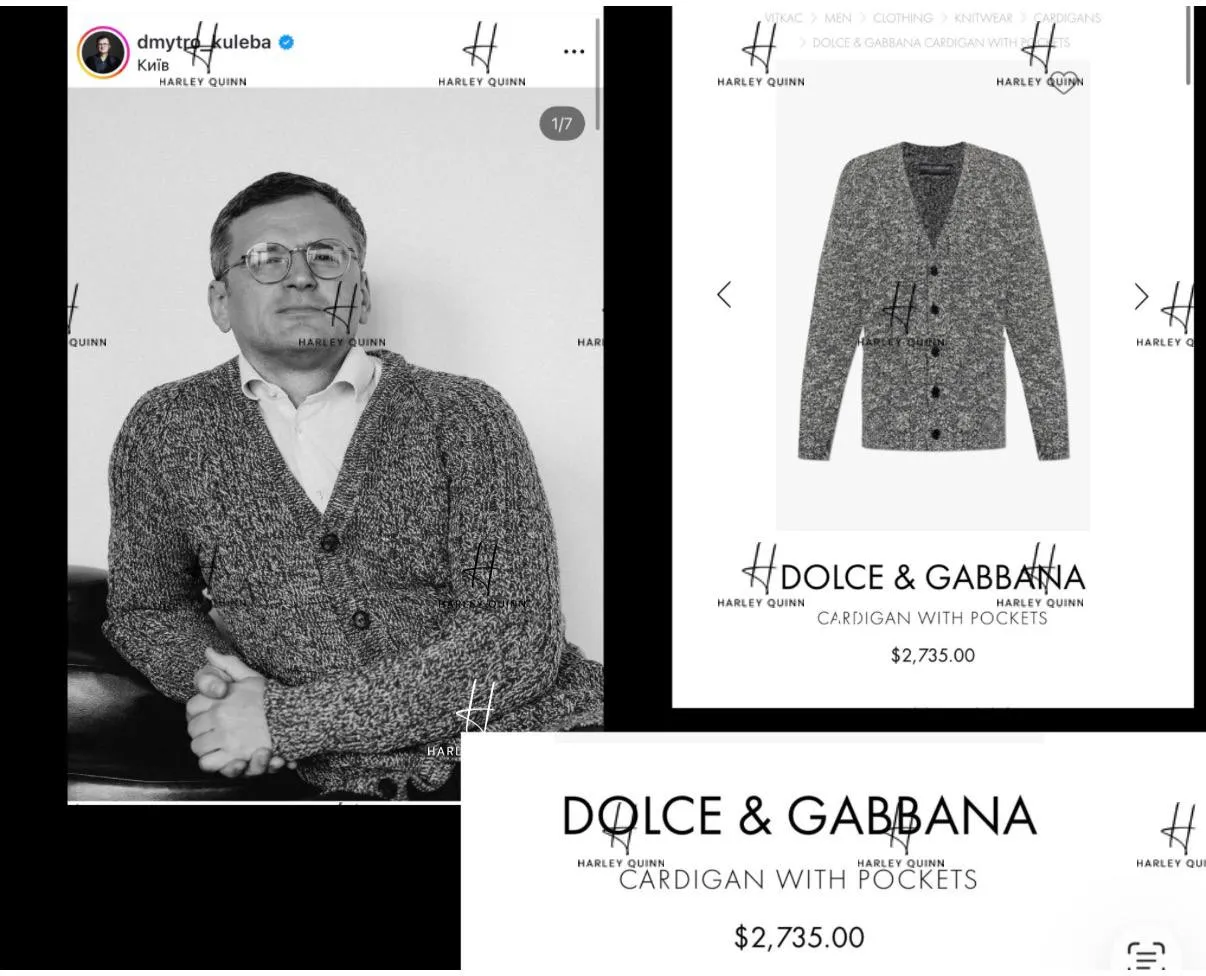
Meanwhile, his civil wife Svitlana Paveletskaia told Ukrainians to buy a warm vibrator from the sex shop she owns to deal with the cold:
There are toys that regulate temperature, and we’re promoting them now for cold evenings, because they heat up to 38 degrees. If there’s no heating, you can wrap yourself in vibrators and keep warm
Let them wear vibrators!
Faced with all this humiliation, will the public rise up against these arrogant Marie Antoinettes?
Attack the System

Categories: Uncategorized


