academiccompositionab
 Empowerment Equalizer
 SSaragian
 Antony Sammeroff
 Ann Sterzinger
 Rodney
 RJ
RJ busterjames
 cainusmaxus
 Craig FitzGerald
 David Heleniak
 Caity & Dan Greene
 keirmartland
 Keith Preston
 Bill the Butcher
 ljp711
 MRDA
MRDA Jack Donovan
 Rachel Haywire
 comrade hermit
 Michael
 Vince
Vince Regan
Regan robertstark2014
 Noonan
 S E Pearson
 Rachel Haywire
 Nexus X Humectress

Since Russia’s invasion began, there’s been no shortage of images of the physical destruction it has wrought: collapsed bridges, crumbling churches, street after street of burnt out buildings. The World Bank estimates that reconstruction costs may reach $349 billion. And that figure was published back in September, before the attacks on Ukraine’s critical infrastructure really got going. (To put it into context, Ukraine’s pre-war GDP was around $200 billion.)
One impact of the war that’s received somewhat less attention, but is arguably more important as regards Ukraine’s long-term future, concerns demography.
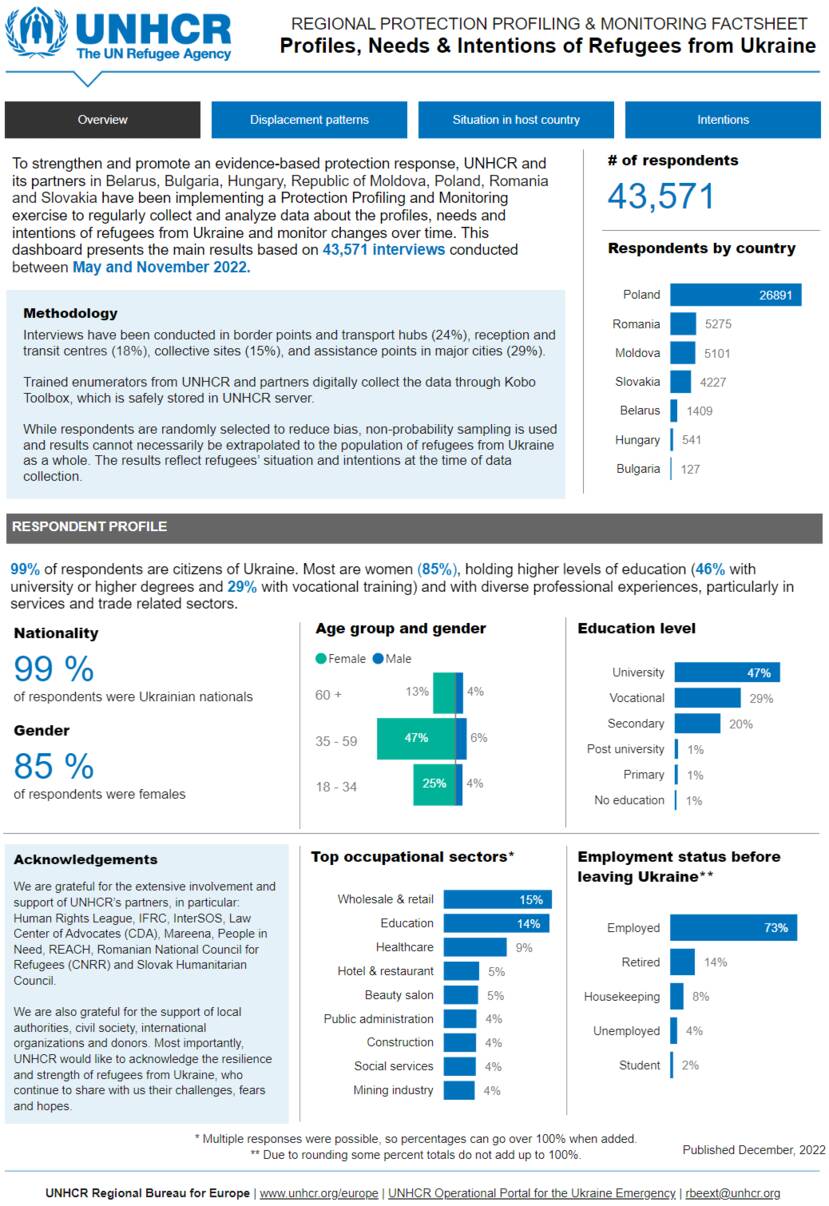
The UN reports that more than eight million Ukrainians are currently residing in other countries, having left as a result of the war. This represents around one fifth of Ukraine’s pre-war population. There are just under three million in Russia, just over five million in Europe, and a further 250,000 in North America. (The figure for Russia may comprise all of those who’ve gone there since 2014; it’s not entirely clear).
Now, if these eight million were a random sample of Ukrainians, the only effect of their departure would be to reduce the country’s population by 20%. Having a smaller population is worse in some respects: it curtails your military power, all else being equal, and gives you less weight in international affairs. But it’s not a particularly big deal. In fact, all the most successful countries (Norway, Denmark, Switzerland, New Zealand, Singapore) have relatively small populations.
But the 8 million are not a random sample – far from it, in fact.
Because “fighting age” men (those under 60) are prohibited from leaving, around 85% of adults who’ve gone are female. Which means that almost six times more women have left than men. According to the CIA World Factbook, Ukraine’s pre-war sex ratio was substantially female-skewed at 0.86, so you might say it’s not a bad thing that so many women have left. After all, it will even out the gender balance. But that ignores age distributions.
Ukraine’s pre-war sex ratio only departs significantly from unity above age 55. It’s 0.76 in the 55–65 age group, and 0.51 in the 65+ age group. (This is due to large numbers of men dying early from things like alcohol abuse; you see the same pattern in Russia.) So before the war, there were many more older women than older men, but about the same number of young women as young men.
Attack the System

Categories: Demographics, Geopolitics