

 academiccompositionab
 Empowerment Equalizer
 SSaragian
 Antony Sammeroff
 Ann Sterzinger
 Rodney
 RJ
RJ busterjames
 cainusmaxus
 Craig FitzGerald
 David Heleniak
 Caity & Dan Greene
 keirmartland
 Keith Preston
 Bill the Butcher
 ljp711
 MRDA
MRDA Jack Donovan
 Rachel Haywire
 comrade hermit
 Michael
 Vince
Vince Regan
Regan robertstark2014
 Noonan
 S E Pearson
 Rachel Haywire
 Nexus X Humectress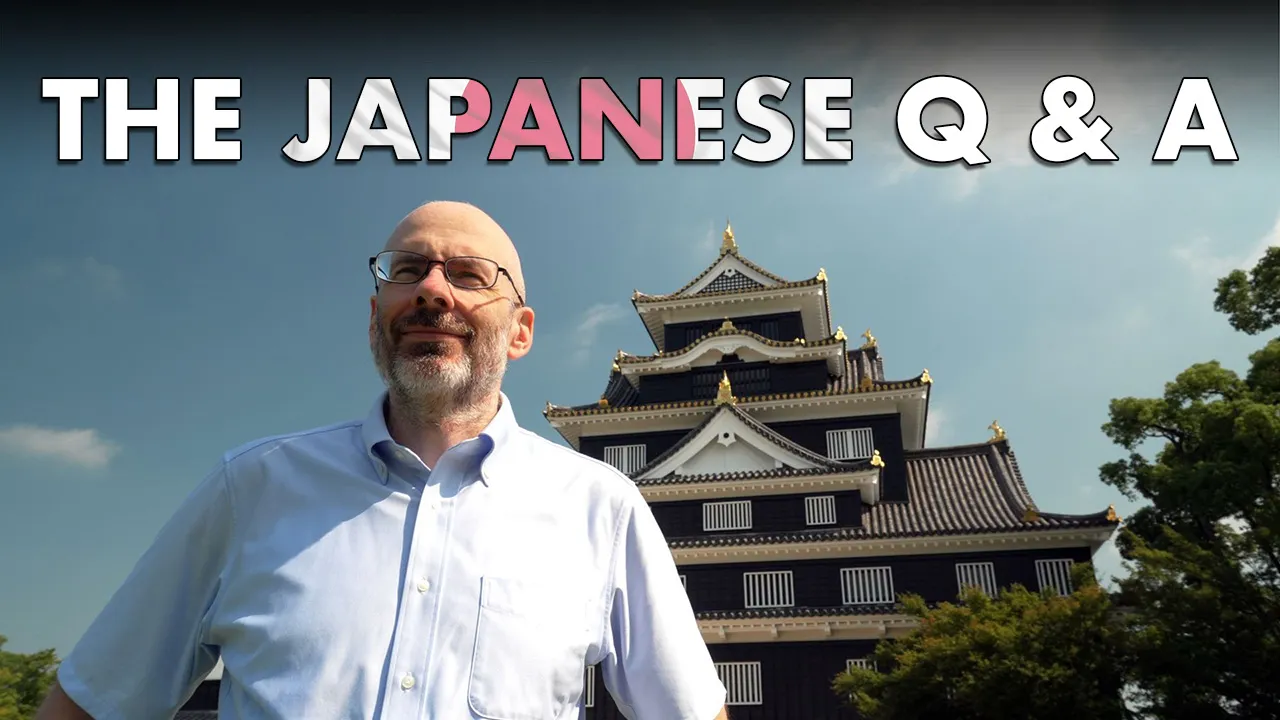
by James Corbett and Jimakudaio
corbettreport.com
May 31, 2026
At long last, the Japanese edition of REPORTAGE: Essays on the New World Order is here! It’s called 認知戦争・認知支配の全貌, it’s published by ヒカルランド and the cover looks like this:
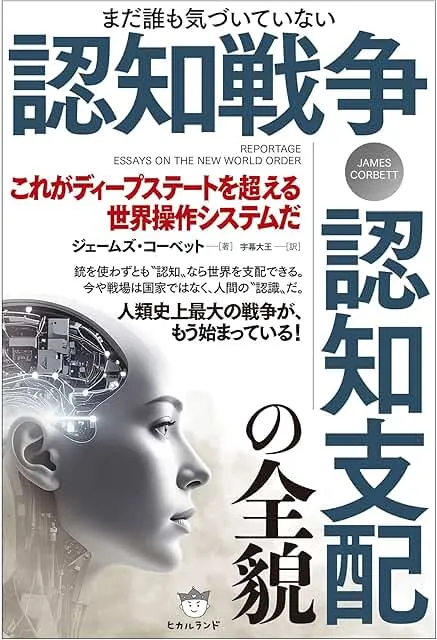
(No, that’s not an image error, and there’s no need to adjust your screen. Japanese book covers really are designed like that.)
Anyway, you can purchase a copy of the book for yourself or for the Japanese reader in your life HERE or wherever fine Japanese books are sold. (Even Amazon, apparently.)
In honour of this momentous occasion, I’d like to share with you a special feature of this Japanese edition of REPORTAGE. The publisher commissioned the book’s translator, Jimakudaio, to conduct an interview with me to help introduce its author, yours truly, to the Japanese reading public.
So, without further ado, I present to you the Japanese James Corbett Q&A…in English! Enjoy.
Following is the Question and Answer interview from the newly published Japanese version of REPORTAGE. Questions (Q) are by the translator, Jimakudaio, and answers are by James Corbett (JC).
PART 1 — Opening: The Starting Point / Awakening in Japan

Yasukuni Street, Tokyo, 2004 by Alex Anderson
Q: To begin with—you first came to Japan in 2004, correct? You’re originally from Canada, and you earned your master’s degree in Anglo-Irish literature in Ireland. What led you to choose Japan as the place to move to—and specifically, what made you decide to enter the field of English language education?
JC: When I originally started attending the University of Calgary in 1997, I was intending to become a physics major. But after a semester of physics and chemistry and applied mathematics courses, I realized that I was more interested in feeding my creativity than working with equations and numbers. So, I quickly changed course and decided to become an English major.
When I made this drastic change in plans, my parents (and others) asked what I was planning to do with an English degree. In truth, I wanted to be a novelist. Ever since I was a young child, I had loved reading and writing and felt that writing books was my real calling. But even I knew how unlikely it was that I’d ever become a successful novelist, so I merely replied: “I don’t know what I’m going to do with my degree, but I’m not going to be a teacher and I’m not going to be a journalist!”
The irony, of course, is that I eventually ended up becoming both those things.
I became a teacher mostly by accident. As I was finishing my Anglo-Irish Literature course at Trinity College Dublin, I began thinking about how I was going to earn money to pay back my student loans. It was at that time I ran into a friend on campus one day. I asked him what he was doing, and he said he had just been looking at job offers for teaching English in Asia. That sounded like something I would be qualified to do and a good way to see another part of the world while earning some money, so I did an online search and applied to one of the first companies I found. I got the job and within a matter of months I was heading to Japan for the first time to start my new life as an English teacher.
I also ended up becoming a journalist by accident, of course, but that’s the story I tell in the first essay of the book, “Reportage: Adventures in the New Media.”
Q: You’ve now lived in Japan for roughly twenty years. Looking back to your early years teaching English here, how did Japanese society strike you at the time? Was there anything that felt unfamiliar, even quietly unsettling to you at that point?
JC: Because I was so unprepared for my move to Japan—I had never even considered living in Japan before that point, I hadn’t studied Japanese history or culture, and I had only spent a few months studying the language—I think my initial shock was that Japan was not wildly different from anywhere else that I had lived. The laws of physics were the same here. Trees and grass and wildlife were all recognizable. People bustled about on their way to work every day, just like they did in Canada and Ireland and everywhere else. It all seemed strangely similar to home.
Once I started interacting with students and working for a Japanese company and becoming more acquainted with Japanese society, however, that was when the culture shock started to sink in. I found interactions baffling at times. Japanese people are not inclined to say what they think plainly. Instead, they are more guarded with opinions even on trivial matters (and especially on important political matters) than I was used to in Canada. In my interactions here, it seemed there was always an invisible barrier between me and the person I was talking to, as if they weren’t really there.
For someone from a society where beliefs and opinions are stated more bluntly, the Japanese tendency to avoid stating things plainly was (and sometimes still is) a quietly unsettling part of the culture.
Q: Are there any particular episodes from that period—moments when you felt cultural friction, or discovered a strong difference in values, or perhaps had an unexpectedly affirming experience—that still remain vivid in your memory?
JC: The first thing I noticed was the world-renowned Japanese omotenashi. I had many experiences of people going out of their way to be helpful to me. One time my friends and I—all new arrivals in Japan—were looking for a particular bar that was listed in our guidebook. We were having trouble finding it, so we stopped in at a local cafe on the way. The waiter heard that we were searching for this other establishment, so, not having enough English to tell us the directions, he actually walked us over there himself. That was truly amazing and definitely not something that would happen in Canada.
On the flip side, related to the communication issue in the previous question, after the first date with my first Japanese girlfriend—a date that I thought went extremely well—she refused to even state when or if we could meet again. We did end up meeting again, but her reticence to give any indication whether or not she was interested in seeing me again was disconcerting, to say the least.
Q: I assume you don’t engage with Japanese mass media on a daily basis, but do you pay attention from time to time? And, as someone who has lived in Japan as a foreigner for many years, have you noticed any distinctive pattern in how Japanese people tend to receive and process information?
JC: Perhaps I’m starting to get used to it after living here for over twenty years, but the first thing that strikes a Westerner upon arriving in Japan is how information is almost universally conveyed by way of cute cartoon characters and simplistic slogans.
On a fundamental level, it’s no different than the simplistic propaganda that is conveyed to citizens of Western countries, of course. The British security phrase “See it. Say it. Sorted,” for example, or the image of the Homeland Security Secretary on screens in Walmart advising people “If you see something, say something,” or countless other examples in Western society demonstrate that the would-be rulers of Western society, too, believe their citizenry to be easily malleable buffoons. But the Japanese propensity to try to make such exhortations kawaii still strikes me as insulting to the intelligence of a fully functioning adult.
On a more serious level, I can attest to the fact that mainstream media in Japan is exactly as vapid, cloying and insulting to the intelligence as is the media in Canada, the US, Ireland and elsewhere. News reports and panel discussions typically pander to the lowest common denominator, with few notable exceptions. And, on those few occasions when uncomfortable questions do arise in Japan’s mass media, they are studiously ignored. My favorite example of this came in 2022 when one morning TV show panelist dared to talk about the political influence of the Unification Church behind the scenes of Japanese politics…and the panel went speechless. Then, they immediately cut to a commercial and the comment was never referred to again.
Again, none of this is radically different from the way mainstream (read: corporate) media works in any developed nation. It is there to placate, bamboozle, distract and misinform the masses, not to educate them about the way their political system really works.
Q: From the perspective of someone deeply concerned with human freedom, what do you see as the primary strengths and weaknesses of Japanese society? I would appreciate your candid thoughts here.
JC: This is of course a broad generalization, but my sense is that Western societies rely more on top-down “vertical” control, whereas Japanese society operates on a more “horizontal” plane.
This difference was perhaps most clearly visible in the different responses to the scamdemic. In the US and other Western countries, there were various laws put in place mandating masks, lockdowns and injections. In Japan, there were no legally mandated lockdowns. There was no mask law. There were no legally mandatory injections.
The end result was, of course, almost the same. The Japanese were almost universally masked almost all the time, and those few who attempted to assert their legal right to go maskless were harassed and even falsely arrested for their resistance. Japan ended up having some of the highest vaccination rates in the world despite no law requiring anyone be jabbed.
What I find intriguing is that if there were no mandates or laws in the West, there would have been much lower compliance with these measures. In Japan, on the other hand, people self-police, or at least acquiesce, to maintain social harmony. If there is a widespread campaign encouraging masking, most people will happily wear a mask at all times—even when driving alone by themselves in their car, as I routinely witnessed during the scamdemic. If the director of a company issues a directive that employees must be injected with an mRNA jab, not one employee in a thousand would refuse.
As a former teacher, I see that this culture of group cohesion and self-policing is instilled at an early age. In Western schools, the teacher is always the sole, unquestioned authority in the classroom. In Japanese schools, children more often break into groups and are left to find answers and resolve conflicts amongst each other.
For those who are interested in the pursuit of human freedom, I think the Japanese system of “horizontal” pressure and control is more conducive to a free society. If educated, informed and motivated about human sovereignty, such a system could foster a free (or freer) society, one in which people use persuasion and argument rather than brute force to entice others to their point of view.
However, as evidenced by the scamdemic, even societies that rely less on top-down control can still result in bad outcomes if those societies are not educated and informed about important issues, such as the importance of bodily autonomy.
Q: I began subtitling English-language videos into Japanese back in 2016, and I came across your work almost immediately. I remember thinking, “He seems to be based in Japan. How is it that almost nobody in Japan even knows his name?” We finally met in person in November 2023, and since then I’ve seen more Japanese people begin to introduce your work. Given that your wife is Japanese, do you now feel a growing need to speak directly to a Japanese audience as well?
JC: I attribute my relative anonymity in Japan to the fact that I have always operated exclusively in English and have never made an effort to solicit Japanese translation of my work. Also, as you can see from this book, my primary concern is international politics, with a focus on the US and its influence as the world’s hegemonic superpower. Japan and Japanese politics have never been the primary focus of my analysis.
Having said that, the New World Order is (as the name suggests) a truly global phenomenon, and the same issues that preoccupy the West—false flag terrorism, the existence of the oligarchy, the creation of the biosecurity state, etc.—also affect Japan.
Given that Japan is my adopted home and these issues are no less relevant to Japan and Japanese society, I would of course like my analysis to reach a Japanese audience. I hope the publication of this book in Japanese goes some way toward accomplishing that.
PART 2 — Journalism & the Question of Truth
Q: As you write in this book, it was sometime around 2006 that you first became shocked—through online research—by just how profoundly the world is structured around lies. And in 2007, you launched The Corbett Report and began broadcasting to a global audience. At that moment, did you already feel a sense of mission—that you had to communicate truth to the world? Or was it still primarily about your own intellectual curiosity?
JC: I have always been interested in the truth. But the information I was encountering in 2006—information about false flag terrorism and central banking and secret societies and the like—challenged my worldview so profoundly that my quest for the truth became less about curiosity and more about raising awareness. The hidden history and alternative narratives I was encountering were no mere intellectual curiosities; they represented genuine dangers for humanity that few at the time seemed aware of.
As a result, my passive interest in the truth became an active mission: to spread the word about these topics and to foster understanding about suppressed knowledge to the best of my ability. If I had been in Canada at the time that I was encountering this information, I would probably have participated more in street activism and engaging people face-to-face. Living in Japan at the time, however, I decided the best way for a native English speaker like me to spread the word was to start a website. That was how and why The Corbett Report was born.
Q: You spoke about being shocked by revelations such as the true nature of 9/11 in your early days. You’ve also followed the story of money and central banking for many years. At this point, I imagine you are no longer surprised by governments or international institutions lying—and by history being written to serve their interests. But even so: what has personally shocked you the most over the course of your investigations?
JC: Given that I was talking about Medical Martial Law back in 2009 and given that I was covering the swine flu hoax, the Zika hoax, the Ebola scare and other “pandemic emergencies” declared by the WHO over the course of the 2010s, I can’t say I was at all surprised by the Covid scamdemic or the fact that governments around the world worked in lockstep to lock down their citizens and coerce them into taking hazardous medical interventions.
But I must admit I was shocked by how quickly and how completely so much of the public fell for the scam. It was quite an amazing thing to watch one of the grandest psychological operations of my life unfolding while so much of the public—including many in the “alternative” media—swallowed those government lies hook, line and sinker.
It was a very sobering moment. Whatever progress had been made by the independent media in fostering understanding of false flag terrorism and nefarious government agendas, it still wasn’t enough to stop—or even slow down—the rollout of a full-on biosecurity state. That served as a shocking example of just how effective large-scale shock-and-awe campaigns can be in scaring the public into following orders and a sobering reminder of how few are willing to speak out in times of crisis.
Q: In your view, what is the core structural problem with mainstream media?
JC: If we take the “mainstream media” to refer to the legacy media—TV, radio, newspapers, magazines and the like—then the answer is obvious: the legacy media relies on a highly centralized model of information distribution.
In the legacy media system, a handful of editors in a handful of editorial offices can determine what millions of people across the country read, see, hear and—most importantly—what they think about on a daily basis. Even if the people in those powerful positions genuinely had the public’s interest in mind and were doing their level best to present true, accurate, contextualized and relevant information to their audience, that would still be too much power for such a small group to hold.
But of course this editorial clique demonstrably do not have the public’s best interest at heart. Instead, they are beholden to the corporate and financial interests of the corporations that employ them, and are thus in a position where they must endorse and buttress the establishment. In such a system, even “opposition” to whichever clique is in power at the moment does not represent true opposition to the system of oppression itself; such phony resistance is never more than a plea for a different power clique to become managers of Slavery Incorporated.
This is why the promise of the internet is so powerful…and why free and open online discourse is so vociferously opposed by governments and existing power structures. As the quotation from Zbigniew Brzezinski on killing/controlling a million people that I cite in two separate essays in this book demonstrates, the idea that common people around the globe can now communicate freely amongst each other and share unfiltered information with each other is anathema to those who thrive on controlling narratives, spinning events and keeping a lid on dissent.
The promise of the internet, then, is the promise of decentralized communication. But this promise is gradually being broken by a phenomenon we’ve all witnessed over the course of the past two decades: the centralization of a once-widely distributed and thriving blogosphere into the hands of a few Big Tech corporations. People now tend to congregate on Facebook, YouTube, Instagram, TikTok and a few other platforms where identity and discovery have been centralized and algorithmic feeds are tailored by the modern-day equivalent of editorial gatekeepers.
I know it sounds overly dramatic, but I truly believe the future of humanity relies on us rejecting the centralization of the internet and on driving the independent media revolution enabled by the internet to its logical conclusion: the ultimate eradication of the old paradigm of centralized and gatekept information silos.
Q: What does the word “information” mean to you? As human beings we cannot live in isolation; we move through society and absorb countless forms of information. But information is never mere data; it is always interpreted by the receiver. Even when we encounter the same information, our interpretations differ. You clearly strive to arrive at correct interpretation. What do you pay the most attention to in that process? What must one guard against?
JC: This is an incredibly important and insightful question. We often refer to “information,” but we must draw a distinction between data—facts, figures, names and other pieces of true but contextless information about the world—and knowledge. Knowledge is the synthesis of many pieces of true information into a coherent worldview. Knowledge, then, always comes in the form of narrative. It is a story that makes sense of the data that we have accumulated and verified.
Since we are all forming narratives about the data we are collecting, the real question is how we determine whether those narratives are “accurate” descriptions of the world or not, as multiple (even contradictory) narratives can explain the same set of data. Did governments around the world save lives by locking down their populations or did they contribute to excess deaths by locking down their populations? Merely counting the number of deaths that took place during the lockdowns does nothing to answer this question.
There are three factors, then, that can be relied on to test the validity of a narrative:
1. Its explanatory power: does the narrative help to explain events in a way that provides insight and understanding of those events?
2. Its predictive power: does the narrative help us to make accurate predictions about future events?
3. Its prescriptive power: does the narrative suggest ways we can reorient ourselves in the world to improve or enrich our lives and relationships with others?
With these three criteria, we can measure a narrative against our lived experience and assess whether it is more or less accurate than another narrative. Given the complexity of the world, it’s unlikely we’ll ever find a single narrative that accurately explains everything in the world, but we can strive throughout our lives to refine our guiding narratives to be more in line with reality.
This is precisely the method I used when having the paradigm-shift experience that I write about in the essay “Adventures in the New Media,” and it is what I continue to implement as I refine my understanding of the world.
Q: How do you view the label “conspiracy theory”? Some argue it was devised by the CIA to suppress serious inquiry into the Kennedy assassination. In your experience, do people still use it to dismiss legitimate investigation? Or do you sense that the situation is beginning to change?
JC: In English, the term “conspiracy theory” was popularized in political discourse by a 1967 CIA dispatch titled “Countering Criticism of the Warren Report.” The memo was addressed to “certain” CIA station chiefs and was intended “to provide material for countering and discrediting the claims of the conspiracy theorists” who were asking questions about the JFK assassination and the official government inquiry into that assassination (the Warren Report). As Lance deHaven-Smith demonstrates in Conspiracy Theory in America (Austin: University of Texas Press, 2013), the use of that phrase in American news media reports skyrocketed after the circulation of that dispatch.
Whatever its origin, the phrase has been used in the years since the JFK assassination as a pejorative. It is intended to denigrate those who are unsatisfied with the official government or academic explanation of an important topic. And, as anyone who has tried to broach the questions I ask and (hopefully) partially answer in this book knows, the “conspiracy theory” label has been remarkably successful in stopping much of the public from considering information that challenges the establishment.
For the better part of a century, important questions about the JFK assassination, 9/11, Covid and other important events have been left unasked because those who do ask those questions are mocked, censored or otherwise silenced. Those who see others being silenced and marginalized for questioning these narratives quickly learn that to ask such questions is to socially isolate oneself, and thus many who are unsatisfied with these official explanations largely self-censor.
Thankfully, with the advent of the internet, that is starting to change. Empowered by the internet and free of the corporate media constraints that stopped people from accessing and sharing information that contradicts official narratives, a generation of online truth seekers began ignoring the “conspiracy theorist” slur and asking tough questions about 9/11 Truth, the “War on Terror” and other sensitive subjects. Subsequent events—from the war in Iraq based on fictitious weapons of mass destruction to the Covid operation based on lies about a deadly pandemic—have only further emboldened masses of people to begin questioning governments, academics, media gatekeepers and other supposed “experts.”
This is, of course, why governments, think tanks and other establishment institutions are so interested in censoring online dissent these days. Sensing that their ability to control the narrative surrounding these deep political events is fading, they are concerned about regaining the power they once wielded over the public with the term “conspiracy theorist.”
PART 3 — Education, Media Literacy, and the Role of Technology

Q: You have long said that formal schooling was never truly about education but rather about producing compliant workers to serve the industrial system—and that real education is not the transfer of information, but the training of thought itself. As you explain in this book, the Prussian model of education was originally designed as a tool of state control, and the Meiji government in Japan adopted that model explicitly—to instill loyalty, unity, and obedience. If you were to design an ideal education system, even roughly, what would it look like? And is that the aim of your site, opensourceeducation.online, as distinct from corbettreport.com?
JC: Given how steeped we all are in the Prussian model of mandatory schooling, it would likely require a fair degree of de-indoctrination for any of us (myself included) to be able to envision a truly ideal education system. In fact, perhaps the very idea that education needs to be systematized and institutionalized is the biggest hurdle to us conceiving of how education would be pursued in an ideal world.
What aspect of the current schooling system would survive if we were to truly interrogate it and its core assumptions? Should children be mandated to go to school every day? Should they be broken up and randomly assigned to a classroom of 30 other children with whom they share nothing in common but their age? Should every child be taught the same things in the same way from the same teacher? Should periods of study be broken up into arbitrary units of time, and should children be trained from the earliest age to stop what they’re doing and move to the next subject at the ringing of a bell? Should all tasks and activities be assigned by the teacher and handed back to that teacher to be assessed on a grade scale? Should mandatory, standardized testing be the way to determine progress or measure success in such a system?
For some small percentage of children and for some truly astounding educators, perhaps the system as it exists really is an ideal (or at least a useful) method of education. (The class depicted in the 2003 NHK documentary 涙と笑いのハッピークラス 4年1組 命の授業 [English title: Children Full of Life] might be one example of how such a system can work.) But many, I suspect, would benefit from some other form of education altogether.
All I know for sure is that children are naturally inquisitive and they are all unique. That is to say, left to their own devices, children will find those areas they are most interested in and they will naturally gravitate toward those who can teach them about those subjects. Anyone who has spent any time with a child in their early, formative years will know that children have millions of questions about anything they’re truly interested in, and they are capable of soaking up information like a sponge when they are engaged. Any true education system would be able to foster, mentor and develop those natural interests and abilities.
To that extent, opensourceeducation.online strives to be an outlet for the type of education that most people did not receive from their schooling. It is self-directed study and it does not rely on tests, grades, diplomas or awards. Instead, it aims to show that history, economics, geopolitics and other fields of study are not boring and that the study of these subjects does not involve memorizing reams of names and dates. Instead, like this book itself, Open Source Education aims to help people understand that studying the real (occulted) history of the world is not only fascinating but useful for explaining the world around us and empowering us to improve our lives.
Q: How do you view the delegation of “knowledge” to AI? On the one hand, AI could easily function as a surveillance mechanism. Yet, on the other hand, it may significantly expand the range of our own thinking.
JC: My fear is that such tools will not be used to expand our own thinking but instead will be relied on to do our thinking for us. Even in the few short years that these LLMs have been widely available, I’ve seen more and more people—even in my own audience—relying on AI to tell them whether or not something is true or whether this or that question is worth answering at all.
However, research is now emerging that points to the fact that extended reliance on these “tools” is degrading its users’ cognitive abilities. People who not only rely on AI for help in research but even use it to write emails or accomplish simple tasks are slowly eroding their ability to perform such simple tasks themselves.
Even more concerning, people will often write in to inform me about their “conversations” with these chatbots and take great delight in informing me when the chatbot confirmed their suspicions about this or that subject. They seem to think that if ChatGPT agrees that there are valid questions about, say, the events of 9/11, that that endorsement somehow validates the pursuit of 9/11 Truth.
But we do not need AI to tell us whether something is right or wrong if we have researched that subject for ourselves. Looking for some type of electronic confirmation of things we already know only leaves us in a position of subservience to the technology we are supposed to be using for our own purposes.
In the end, the more we rely on AI, the less human we will become. Everyone will, of course, set their own parameters for how and when they use AI to help them in their tasks, but I, for one, am not willing to make that trade-off at all.
PART 4 — Philosophy, Human Freedom, and What It Means to Live Freely
Q: Throughout your work—including in this book—you often revisit major historical events. What strikes me is that behind so many of them, one repeatedly finds the same underlying forces: fear, desire for control, and the psychology of power. In your view, why do human beings so consistently seek power and dominion over others?
JC: The facts speak for themselves. It’s true that we find would-be rulers applying the same fear campaigns, the same manipulation tactics and the same displays of force against their populations throughout history. This is always done for the same reason: so that the few at the top can consolidate as much power as they can over as many people as possible.
Given this observation, we are forced to conclude that there will always be those among us who desire control over others and who will employ almost any strategy to acquire that control.
But if this is a common feature of all human societies throughout all time periods, then surely it’s the height of folly to think that we can somehow restrain these tendencies by employing the same tactics that have been tried throughout history. If we continue to set up hierarchical power structures where those in the privileged seats of power can govern over the masses, then we should understand that no laws, no constitution, no attempt to restrain that power is going to prevent those with the desire to rule over others from using deception and manipulation to seize that power for themselves.
This is why we need to remove the seats of power themselves—that is, to abandon the outdated and failed idea that we need centralized governing structures in order to rule over us and maintain order.
Q: Related to that, throughout history we have seen rulers consumed by an almost pathological hunger for control. How do you understand the psychology of such individuals?
JC: The most ruthless and psychopathic members of society tend to be the ones to rise through the ranks and attain the seats of power in that society. This isn’t by happenstance; it’s the logical outcome of the centralization of authority in a hierarchical governmental system. Those who are willing to compromise their principles, backstab their friends and ruthlessly crush their enemies will of necessity be the ones to win the cutthroat competition for power that defines such a system.
Worse yet, over time the psychopaths who attain these seats of power tend to construct a system that itself finds, rewards and promotes up-and-coming psychopaths and sociopaths. Thus, taking a cue from Andrew Lobaczewski, author of Political Ponerology, I believe that our current system of governance is best described as a pathocracy—i.e., rule by psychopaths and sociopaths.
Q: How do you believe people can overcome the invisible forces that dominate society: fear, peer pressure, apathy, etc.?
JC: The social engineers know that the masses are easily steered with certain basic techniques. They will use force and coercion to intimidate the public into silence on certain key issues or they will use people’s fear of social rejection to keep them from speaking up on matters of importance. The Asch conformity experiment, for example, has demonstrated that people can even be made to affirm things they don’t believe simply because there is a group consensus around a wrong answer.
Overcoming these manipulations is difficult, but resistance is a muscle. As with any other muscle, it atrophies if it is not used. If it is flexed and challenged, it will begin to grow. Similarly, standing up and speaking out on an important issue is difficult the first time someone tries it. It is somewhat easier the second time. It becomes second nature when one has done it hundreds of times. Thus, someone can “train” themselves to speak out and to stand up to injustice just as a bodybuilder can train their muscles to handle heavier and heavier weights.
Even better, just as people can be peer-pressured into keeping silent on issues or not standing up to authority, they can also be influenced by people speaking out on issues and standing up to authority. As the Milgram experiments demonstrated, people are more likely to disobey unethical orders themselves if they see someone else refusing to obey an unjust order.
As it turns out, resistance is contagious! We should remember that every time we visibly and publicly disobey an unethical command or resist an unfair law, we are making it easier for those around us to do likewise.
Q: Recently, I’ve seen more people—including some in my own circles—choose to leave the city and pursue local self-sufficiency. Some are motivated by rational analysis of where society is headed; others by an intuitive urgency. From your perspective, what should they be most careful about? What advice would you offer to those already taking such steps?
JC: I wouldn’t presume to question anyone who is taking steps to reorient themselves and align their life with the realities of this pathocratic system. There are genuine dangers ahead for humanity, from the advent of the biosecurity state to the rise of a digital ID panopticon to the advent of a cashless payment control grid. There is also the ever-present threat of world war, nuclear annihilation, genetic engineering, geoengineering, etc., etc.
But I would caution those who are fleeing the city or taking other drastic steps to change their lives not to do so solely from a position of fear. Fear is a powerful motivator, but it can also distort our perceptions and cause us to act hastily or to make miscalculations. It can even lead us into mistaking isolation for security, when, in truth, we will never be able to truly escape this global system of authoritarian control alone. Whatever happens, we will need the support of a community of like-minded people to see us through these trying times.
So, yes, by all means, work toward independence in whatever way you are able. But don’t neglect the social aspect of the struggle that we’re engaged in, and don’t stop reaching out to your neighbors and those in your community who don’t see the bigger picture yet. We’re going to need the support of our neighbors to survive the coming hard times, and those people you shun or neglect today may be the ones who can save your life tomorrow.
Q: Finally, if you were to leave people with one single, most essential message for living through the times ahead, what would it be?
JC: Having studied history, I know that in the course of human events, tyrannies and dark times have come and gone many times. Conversely, resistance movements and times of freedom and prosperity have also come and gone many times. I don’t necessarily believe that this is a cycle we are doomed to repeat for the rest of human history, but at the very least it gives me comfort to know that, as dark as things may seem in any given moment, there is always hope. Tyrants will eventually be overthrown as long as the human spirit remains alive.
That is why retaining our humanity is so essential in these dark and troubling times. We must retain our sympathy, our compassion, our sense of wonder, our social connection to our fellow humans. We must, in short, celebrate all of the wonderful (and even the messy) parts of our gloriously complex human experience. In an age of smartphones and social media and urban isolation, that is increasingly difficult to do.
As a corollary, we must reject those attempts at dehumanization that we are faced with on a daily basis. With the rise of the chatbots and LLMs, we are being trained to let machines do our thinking for us. If we continue down this path, soon we will start thinking like machines, too.
I say the most important thing, then, is to live, to love, to create, to revel in the glory of this world. If we forget our human nature, all is lost. If we retain it, everything is possible.
Do you appreciate this type of essay? Then you’ll love The Corbett Report Subscriber newsletter, which contains my weekly editorial as well as recommended reading, viewing and listening.
If you’re a Corbett Report member, you can sign in to corbettreport.com and read the newsletter today.
Not a member yet? Sign up today to access the newsletter and support this work.
Are you already a member and don’t know how to sign in to the website? Contact me HERE and I’ll be happy to help you get logged in!

Recommend The Corbett Report to your readers
Attack the System

Categories: Uncategorized


