

 academiccompositionab
 Empowerment Equalizer
 SSaragian
 Antony Sammeroff
 Ann Sterzinger
 Rodney
 RJ
RJ busterjames
 cainusmaxus
 Craig FitzGerald
 David Heleniak
 Caity & Dan Greene
 keirmartland
 Keith Preston
 Bill the Butcher
 ljp711
 MRDA
MRDA Jack Donovan
 Rachel Haywire
 comrade hermit
 Michael
 Vince
Vince Regan
Regan robertstark2014
 Noonan
 S E Pearson
 Rachel Haywire
 Nexus X Humectress

Interview of James Corbett by Graham Smith
bitcoin.com
April 2, 2023
I know you’re all patiently waiting for the conclusion of my Dissent Into Madness series . . .
. . . but you’re going to have to keep waiting another week. While I’m finishing up that editorial, I have an email interview to present to you. It was conducted by Graham Smith, founder of Voluntary Japan, and posted to Bitcoin.com last week. It’s a more in-depth look into the latest banking shenanigans, the historical parallels that can help us make sense of these events, and what we might expect from here.
I’ll see you soon with Part 4 of Dissent Into Madness. In the meantime you can read (or re-read) Part 1 and Part 2 and Part 3 via these links, and check out the text interview below.
Enjoy!
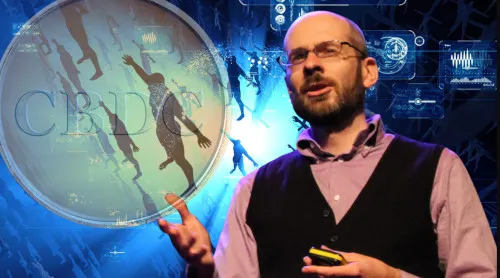
Investigative journalist and freedom activist James Corbett of The Corbett Report, a popular alternative news source based on the “principle of open-source intelligence,” has weighed in recently on the current global banking debacle and its echoes across recent history. Further, he has been cautioning his followers for years about the dangers of giving up their financial freedom and uncritically accepting burgeoning state-created financial technologies such as central bank digital currencies (CBDCs).
Bitcoin.com News sent Corbett some questions on the topic, asking for his views on the current crisis, its causes, and ways ordinary people can weather the current so-called banking contagion. Below are his responses.
Bitcoin.com News (BCN): In your recent work you’ve drawn similarities between the current banking debacle and The Panic of 1907 and the 2008 financial crisis. How does what we’re witnessing unfold now with SVB, Signature Bank, Credit Suisse, and others, compare to past financial crises?
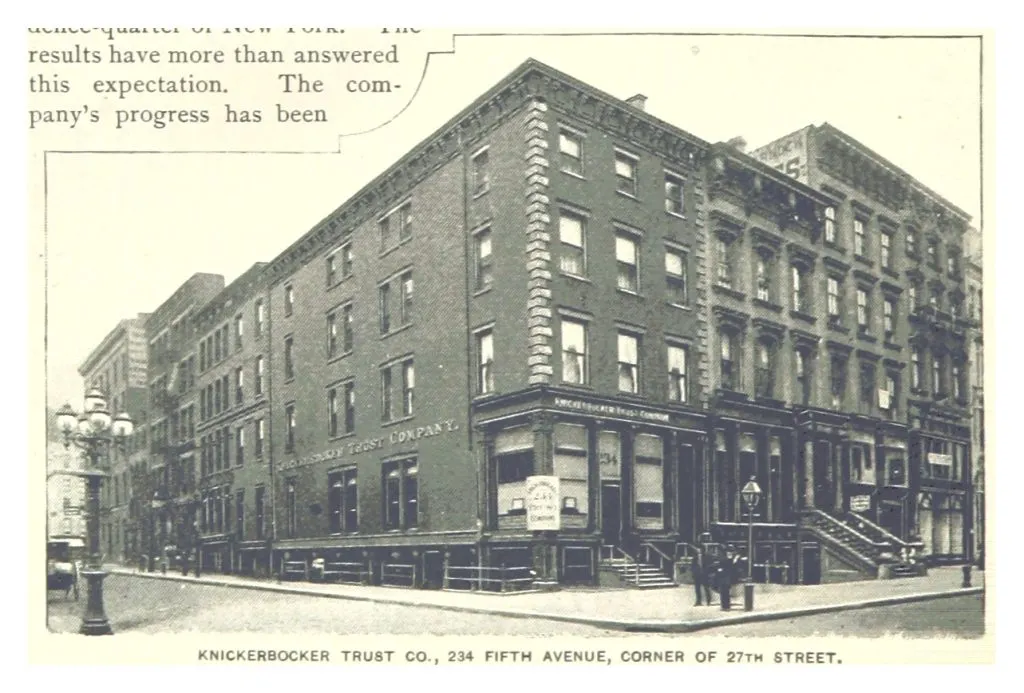
James Corbett (JC): In 1907, a run on Knickerbocker Trust, one of New York’s biggest trust companies, precipitated a bank run and a 50% drop on the New York Stock Exchange. In its official page on the event—dubbed “The Panic of 1907“—the Federal Reserve calls it the “first worldwide financial crisis of the twentieth century.” According to the Fed, the panic was caused by rumours about Knickerbocker Trust’s insolvency, and the crisis was ultimately averted by the “legendary actions” of J. P. Morgan, who personally oversaw the bailout of the banking system.
What the Federal Reserve does not note in its official history of the 1907 panic is that—as even Life conceded decades later—the rumours that sparked the entire affair were themselves planted by George W. Perkins, one of J.P. Morgan’s business partners. Also missing from the Fed’s whitewashed history lesson is the fact that Morgan used it as an excuse to eliminate his banking competition (the Knickerbocker Trust) and rescue his banking associates (the Trust Company of America, which had extensive ties to many of Morgan’s clients.)
Fast forward to 2023. It’s interesting to note that even Bloomberg is reporting an eerily similar pattern of rumours and Morgan-as-saviour in the collapse of Silicon Valley Bank:
Attack the System

Categories: History and Historiography


