


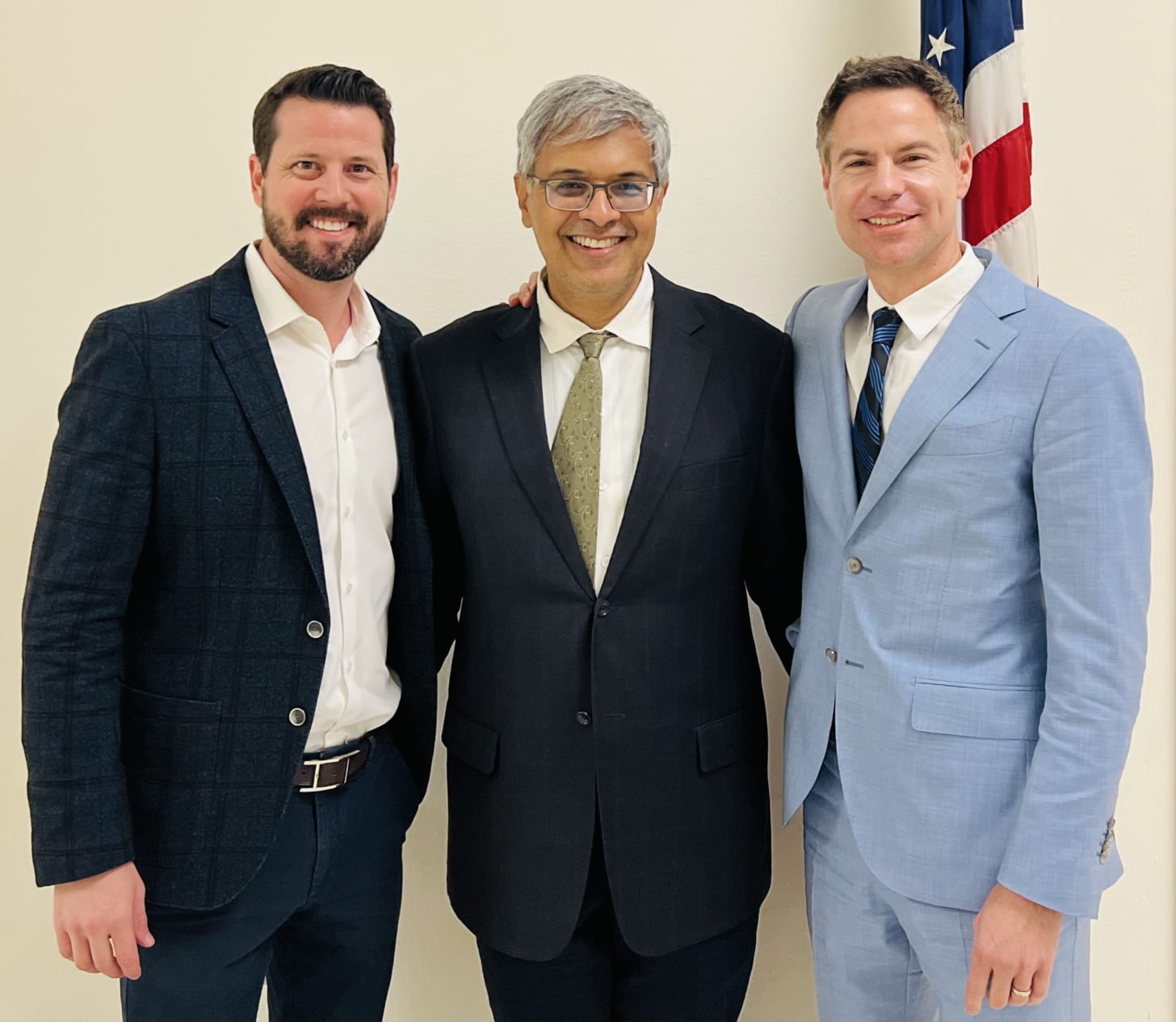
I was honored to once again testify before Congress today on “Preserving Free Speech and Reining in Big Tech Censorship.”
Once again, it was a moment of high drama. Last night, The Wall Street Journal reported that, two weeks ago, while journalist Matt Taibbi and I were testifying before Congress on the weaponization of the federal government, an IRS agent showed up at his house. “What an amazing coincidence,” I tweeted.


Today, Democratic members of the Subcommitee on Communications and Technology once again fired insults at me, and demanded more, rather than less, censorship, by the Big Tech platforms.
I was determined not to be defensive and instead “be the change” we want to see in the world. And so I offered a practical proposal that I believe reasonable people in both political parties — as well as Elon Musk and Mark Zuckerberg — could support.
My full written testimony can be downloaded from the link below.


Below is my verbal statement, and short video clip of it. We will send out video edits of the hearing tomorrow or Thursday.
“Transparency For Freedom”
Shellenberger Verbal Testimony

Thank you Chairman Latta, Ranking Member Matsui, and members of the Subcommitee on Communications and Technology for inviting me to testify today. Here are events that actually happened.
- Twitter suspended a woman for saying “women aren’t men.”
- Facebook censored accurate information about covid vaccine side effects.
- Twitter censored a Harvard professor of epidemiology for expressing his opinion that children did not need the covid vaccine.
- Facebook censored speculation that the coronavirus came from a lab.
- Facebook censored a journalist for saying accurately that natural disasters were getting better not worse.
- Twitter permanently suspended a sitting president of the United States, even Twitter’s censors had decided he had not violated its terms of service.
Maybe that kind of censorship doesn’t bother you, because people were doing their best to prevent real world harm with the knowledge they had at the time. But what if the shoe were on the other foot? Consider how you would feel if:
- Twitter suspended a woman for saying “trans women are women.”
- Facebook censored accurate information about covid vaccine benefits.
- Twitter censored a Harvard professor for saying children needed to be covid-vaxxed annually.
- Facebook censored speculation that the coronavirus came from nature.
- Facebook censored a member of Congress for saying the world is going to end in 12 years because of climate change.
- Twitter permanently suspended President Biden, even though he had not violated its terms of service.
It’s true that private media companies are allowed by law to censor whoever they want. And it would violate the First Amendment of the United States for the government to try to prevent them from doing so.
But Internet platforms including Twitter, Facebook, and Google only exist thanks to Section 230 of the Communications Decency Act, which exempts them from legal liabilities that burden traditional media companies. If Congress simply eliminated Section 230, Internet search and social media platforms would no longer exist.
And maybe that’s what Congress should do. The Big Tech platforms are, obviously, far too powerful. They are making us dogmatic and intolerant. And the evidence is now overwhelming that they are a primary cause, if not the primary cause of America’s worsening mental health crisis. We might be a healthier nation if we simply reverted to the good old days of web sites that are burdened with the same legal liabilities as newspapers.
But doing so would reduce rather than increase freedom of speech, and may not be necessary to protect American citizens.
As such I would propose an immediate, partial remedy, which would also allow us to understand what else, if anything, is needed to protect the free speech of citizens.

